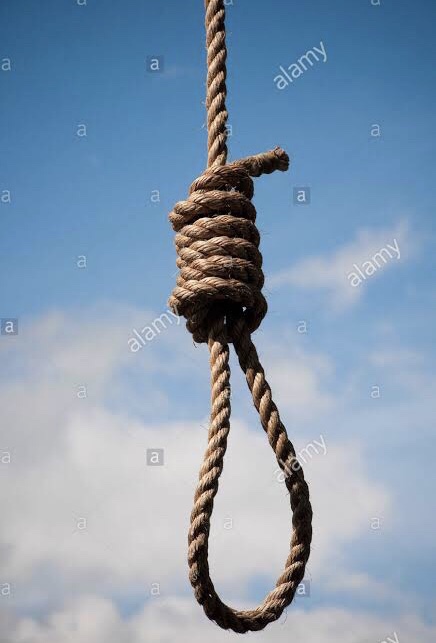
In light of the speech given by the president of Uganda, Mr Museveni on January 18th 2018 while presiding at a passing out ceremony for 706 prison guards and 213 mid-level prison managers at the Luzira Prison in the capital Kampala, the president highlighted his intention to reinstate the death penalty in Uganda particularly for capital offences.
This reignites a debate that has for years gone on in the Ugandan Human rights circles as many CSOs continue to push for the complete abolition of the death penalty in Uganda. Uganda is among the 35 African states that continue to have the death penalty prescribed as a penalty for the most capital of offences and whereas states such as Egypt and Sudan et al have actively carried out this sentence to date, albeit the waning voices from various NGOs and the international community, Uganda has not had executions since 1999.
In the president’s speech he highlights the fact that this leniency towards capital offenders is one of the factors to which the current surge and bulge in the criminal can be blamed. But a pertinent question that arises remains whether the death penalty is a solution that shall solve the problem and were the president’s decision leaves the current 278 inmates currently on death row especially in light of the decision by the Supreme Court of Uganda in the Susan Kigula case as regards the “death row syndrome”.
Matter-of-factly, whereas the death penalty is lauded as a solution to the rise in crime, it can still not be satisfactorily shown to be a deterrent to crime, countries like Kuwait and Saudi Arabia have capital punishments meted out frequently but still the crimes continue to be carried out.
Internationally the idea of an ‘eye for an eye’ is inconsistent with developed countries and the general international trend shows that the growing majority of countries in the world have either abolished the death penalty in law or in practice, the statement of the president therefore shows a regression from the leaps and strides that have been taken internationally and regionally in terms of attaining a global standard of human rights for all persons.
That aside, the death penalty in its state, defeats the purpose of rehabilitation and punishment which is the principle role of the prisons system, what punishment does a capital offender serve if he is released from the bonds of life (in 3 years, for the Ugandan capital offender) what is the punishment there? Those that try to justify it by saying that others learn a lesson by seeing executions but the reality still shows that the crime rate for countries that still have the death penalty has not necessarily reduced as compared to abolitionist countries.
As of 2017, only two African countries carried out death sentences, Somalia and Egypt with the vast majority being in fact abortionist states either in law or in practice, with Rwanda(2007), and Congo(2015) and Benin(2016) being some of the latest African entrants, Gambia has also announced a moratorium on the killings as the first step towards complete abolition.
The general human rights situation shows a continued desired and trend by most states to move towards complete abolition of the capital punishment. Of the 195 members of the United Nations, 103 are abolitionist in law and in practice representing 53% of the membership, 32 states have not had an execution in the past decade or so many of these however have either announced a moratorium on the killings or have abolished capital punishment in practice. Virtually all members of the European Union have abolished the death penalty as the EU holds a strong position against the death penalty; its abolition is a key objective for the Union’s human rights policy, abolition is also a pre-condition for entry into the European Union and only Belarus in Europe still carries out capital punishment.
There is no better time than right now for the parliament, the state and civil society to step in again and have this “revenge killing” by the state abolished, the wave of international human rights that is sweeping across the civilized world should not leave Uganda behind.
 JEFFREY KADDU'S LEGAL TAKE.